






















Twelve days have passed since the United States and Israel launched their attack on Iran, killing Supreme Leader Ayatollah Ali Khamenei and plunging the Middle East into open conflict. In that time, airstrikes have continued, retaliatory attacks have multiplied, and oil prices have climbed to levels that worry economists and ordinary citizens alike. The world watches, waits, and wonders where this leads.
But beneath the surface of daily updates and official statements, a more fundamental question lingers. It is the question historians will examine in years to come, that policy analysts are grappling with now, and that ordinary people feeling the weight of rising fuel costs have already begun to ask. It is a question that deserves a straightforward answer, however uncomfortable that answer may be.

Was this war a mistake?
Not in the moral or legal sense alone, though both dimensions merit serious discussion. The question here is more practical: did the Trump administration fully comprehend what it was getting into? Did it strike at Iran without a clear understanding of how the Islamic Republic would respond and what the broader consequences would be?
Consider the evidence of the past twelve days. When the attack came on February 28th, the stated objectives were clear enough—targeting Iran’s leadership, its nuclear programme, and its regional influence. But what followed should have been predictable to anyone familiar with the region. Iran did not absorb the blow and seek a quiet exit. It struck back where it knew it could cause maximum discomfort: the Strait of Hormuz.
The Strait is not merely a stretch of water. It is a passage through which 20 per cent of the world’s crude oil travels each day. It is the reason Gulf nations have invested heavily in military protection. It is the reason energy security remains a permanent item on the agenda of every major world capital. And now, Iran has demonstrated that it can disrupt traffic through that strait at will.
The attacks on the Liberian-flagged container ship Express Rome and the Thai bulk carrier Mayuree Naree were not random acts. They were deliberate messages. They communicated that Iran retains the capacity to reach the world’s fuel supply. They signalled that this conflict would not be confined to military targets but would extend to commercial vessels and the global economy that depends on them.
Ali Fadavi, an advisor to Iran’s Revolutionary Guards, made the strategy explicit. The United States and Israel, he said, must now prepare for “a long-term war of attrition that will destroy the entire American economy and the world economy.” Whatever one makes of the rhetoric, the underlying message is clear: Iran intends to fight this war on economic terrain.
The response from Washington has been characteristically confident. President Trump, in an interview with Axios, stated: “Any time I want it to end, it will end.” The assertion projects control and certainty. But the reality on the ground tells a different story. Drones have fallen near Dubai airport, injuring four people. Fuel tanks have burned at Oman’s Salalah port. An apartment building in central Beirut has been reduced to rubble. These are not the hallmarks of a conflict nearing its conclusion.
The International Energy Agency has announced the largest release of strategic oil reserves in history—400 million barrels. The scale of the intervention reflects the seriousness with which energy officials view the situation. Yet even this unprecedented measure can only provide temporary relief. It addresses symptoms rather than causes. It buys time but does not resolve the underlying instability.
The human toll continues to mount. Iran’s health ministry reports more than 1,200 dead and over 10,000 injured. Crew members have been rescued from burning ships; others remain unaccounted for. An apartment building in Beirut, home to ordinary families going about their ordinary lives, now lies in ruins. Behind each number is a story, a family, a life interrupted or ended.
And then there are those who carry on, as people always do. In Tehran, a 70-year-old woman named Mahvash told reporters: “We’ve put our faith in God. For now, there’s food in the shops.” Another resident observed: “People are getting used to living despite everything and adapting—as best they can.” The phrase captures something essential: resilience born of necessity, not choice.
The question of whether this war was a mistake cannot be separated from the question of whether its architects understood the likely consequences. Wars are not abstract exercises. They produce real outcomes for real people. When a nation strikes at the heart of another, it must anticipate retaliation. It must consider second-order effects. It must prepare for the possibility that events will not unfold according to plan.
The early statements from the White House projected confidence in a quick and decisive outcome. The assumption seemed to be that Iran would crumble or capitulate. Instead, Iran has demonstrated both capacity and will to fight on terms of its choosing. Oil prices have surged. Allies in the Gulf find themselves directly threatened. The conflict shows no sign of winding down.
President Trump notes that there is little left for US forces to target in Iran, at least in a conventional military sense. But this war was never likely to be decided by airstrikes alone. It is being fought in the straits, in the markets, in the economic calculations of nations dependent on stable energy supplies. In those arenas, Iran retains significant leverage.
The Strait of Hormuz will remain narrow and vulnerable as long as oil flows through it. That is a geographic fact, not a military one. And as long as that fact holds, Iran possesses a weapon that no amount of bombing can eliminate. You cannot destroy a strait. You cannot bomb a choke point into submission.
Where does this leave us? It leaves us with a conflict that appears to be spiralling beyond anyone’s control. It leaves regional allies looking nervously over their shoulders. It leaves the global economy navigating uncertain waters. And it leaves a question that grows more urgent by the day: how does this end?
The honest answer is that no one knows. Not the generals planning the next strike. Not the diplomats working the phones. Not the president who expresses confidence that he can end it whenever he chooses. Wars have a way of defying expectations, of taking on lives of their own, of becoming something their originators never intended.
Perhaps, in time, historians will identify the moment when things could have gone differently. Perhaps they will point to assumptions left unexamined, warnings ignored, decisions made in haste. Perhaps they will conclude that this war was a mistake—not in its stated aims, but in its failure to anticipate what would come next.
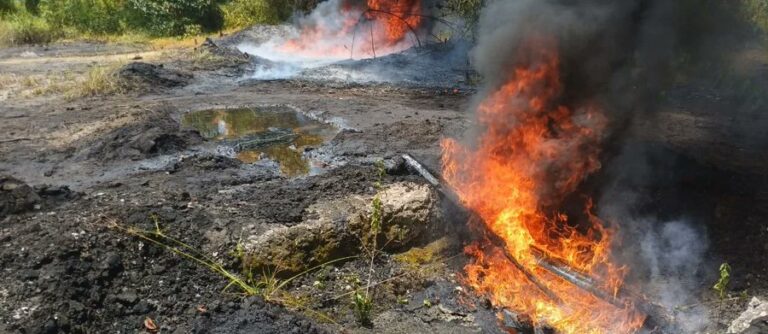
For now, the fires burn. The oil flows, though for how long no one can say. And the world watches, waiting to see what the morning brings.
One thing is certain: when you strike at a nation, you must be prepared for it to strike back. When you leave no room for retreat, you must expect your adversary to look for other doors. And when you start a war, you surrender the right to complain about where it leads.
The question before us now is not whether this war was a mistake. That debate will continue for years. The question is whether we will learn from it before the next one begins.












Discussion about this post